

Peace in the Family. Prosperity in the Business. The Unwritten Rules of Family Enterprise That Most Advisors Get Wrong.

A conversation with Michael Mirau · CEO & Chief Strategist, ProActive Leadership Group · Author, The Family Business Manifesto
Michael Mirau was in a rehabilitation hospital when we spoke. Twelve days out from knee surgery, still in the building, laptop open, next call already scheduled. His therapist had just asked if he was working. He said yes. Every day.
It was, without meaning to be, a perfect illustration of the man and his philosophy. He doesn’t talk about accountability. He embodies it. And when you spend time with him, it becomes clear why the family businesses he works with more than a thousand of them across 25 years tend to produce results that outlast any single coach, any single strategy, or any single generation.
Mirau is the founder and CEO of the ProActive Leadership Group, a former senior executive at E-Systems, J.C. Penney and Interstate Batteries and the author of The Family Business Manifesto, a book born not from theory but from pattern recognition. After two and a half decades of sitting across from family business owners, he kept seeing the same fractures in the same places. He decided to write them down.
He is now part of the Family Business Flywheel coaching network at Flywheel Family Enterprise, the coordinated ecosystem that Michael Palumbos built to address exactly what Mirau has spent a career diagnosing: the gap between a family’s financial plan and its ability to stay aligned across generations. This is his story. And his counsel.
Why He Wrote the Manifesto
A manifesto is a declaration. It implies someone has seen enough to take a stand. We asked Mirau what he saw enough of. His answer was immediate.
“Over approximately 25 years of doing this, probably 70% of my clients have been family businesses of some shape, form or fashion and what I found was that they all had the same issues.”
— Michael Mirau
The same issues. Across industries. Across sizes. Across generations. The specifics varied between a construction company in Texas, a wholesale distributor in the Midwest, a multi-location retail business in the South, but the underlying fracture lines were identical.
“The challenge a lot of times is that the founder, the patriarch, really thinks they’re helping their family. But in a lot of cases, they’re hurting their family because they’re not allowing them to grow up. They’re not allowing them to get out and earn what they need to earn. And it creates this entitlement thing inside the family.”
— Michael Mirau
Entitlement, in Mirau’s experience, doesn’t announce itself. It accumulates quietly in the unspoken rules about who gets promoted, who gets protected, who gets a pass. And when it surfaces, it doesn’t surface in a boardroom. It surfaces at Thanksgiving. Or in a sibling’s sabotage of a sales pipeline. Or in a daughter who is the most qualified person in the organization but will never be given the CEO title because of her gender. These are not edge cases. They are the rule. “If I ignore these problems, they’ll go away. They don’t go away. They just perpetuate. They get worse.”
The Manifesto was his answer to that pattern. Not a polished framework developed in a consulting firm, but a practitioner’s field guide, built from the cases that succeeded and, perhaps more importantly, the ones that didn’t.

Where Family Businesses Actually Break
Ask most advisors where family businesses break down and they will point to strategy, liquidity, or estate planning. Mirau points somewhere else entirely.
“The breaking starts with relationship issues taking precedence over the business issues. Family trumps the business. If I had to choose, I would rather have us be able to sit down together at Thanksgiving in peace than have the business blow the doors off and everybody hating each other.”
— Michael Mirau
This is not sentiment. It is a strategy. Because a family that can’t sit at Thanksgiving without conflict cannot govern an enterprise, execute a succession, or coordinate a wealth transfer no matter how sophisticated the financial plan is.
He illustrated it with a case that stayed with him. A father died, leaving a business to two sons. One stayed and ran sales. The other had gone to college, played football and gotten a business degree. The mother, wanting to honor the education, made the returning son CEO. The son who had stayed there, building the thing, passed over.
“Come to find out the reason the sales were stagnant for six months was the younger brother was trying to sabotage the older brother because he didn’t want him to have success. That’s just an example of what happens. Because somebody’s older, or because they went to college, those kinds of things come into play.”
— Michael Mirau
The financial plan was intact. The organizational chart was drawn. But nobody had addressed the wound that had been opened the day the decision was made. And wounds that aren’t addressed in family businesses don’t heal. They metastasize.
The Gender Dynamic Nobody Names
Mirau is direct about something most advisors step around.
“I’ve got a client right now where the father probably has the smartest person in the organization as the CFO, which is the daughter. Highly educated, very good at what she does. But the dad doesn’t see her ever stepping into the CEO role because she’s female. And he’s got a son who’s not near as qualified, not near as smart, not near as strategic as she is and he’s probably going to end up being the one that gets promoted.”
— Michael Mirau
His role in that engagement is not to override the father’s decision. It is to ensure the father makes the decision with full information rather than old paradigms. And then to build the sibling relationship strong enough to survive whichever outcome results.
This is the work most advisors won’t do. Mirau does it because he has seen what happens when nobody does.
The Four Things That Determine Whether a Family Business Survives
After 25 years and more than a thousand engagements, Mirau has distilled the architecture of a healthy family enterprise to four elements. They are not revolutionary. They are simply rare.
- 01 Roles and responsibilities — defined and enforced the same way for family members as for anyone else.
- 02 Communication — honest, direct and not filtered through family loyalty or fear of conflict.
- 03 Clarity of expectations — what success looks like, how it is measured and what happens when it isn’t achieved.
- 04 Culture — the shared agreement about how the family and the business will treat each other, written down and lived out.
The organizations that implement these four things, in his experience, do not just survive generational transitions. They compound across them. Mirau is direct about something most advisors step around.
“The organizations I’ve worked with that have implemented this, it’s been tremendous. They’ve been able to create generational wealth for their family.”
— Michael Mirau
The ones that don’t implement them follow a different trajectory. They may be financially successful for a generation. But the equity, the culture and the relationships that made the business what it is tend not to survive the founder.
What the Work Actually Produces
From $10M to $17M — navigating the family alongside the growth
A wholesale distributor of construction supplies. Second-and-a-half generation. Revenue was just under $10 million when Mirau began working with them five years ago. The financials were the easier part. The family dynamics were the work.
Today the business is approaching $17 million and still standing, still together, still aligned. In a family business, that combination is rarer than the revenue number suggests.
$20M to exit at 10x in three years A wholesale distributor of geosynthetic construction materials in Austin. The owner came to Mirau with a specific request and a specific timeline. His answer was immediate.
“He told me, I want to be in position to sell this in three years. When we started, their revenues were about 20 million. They were upside down about 2 million a year. They had tax issues, inventory issues and they didn’t have a leadership team.”
— Michael Mirau
Mirau built the leadership team. Fixed the financial structure. Addressed the operational gaps. Three years later, the owner exited at a 10x multiple. The leadership team was the variable that made the difference. Not the strategy. Not the market. The people in the room when the founder stepped back.
This is the Self-Operating Business principle at its most concrete. A business that depends on its founder to function cannot be sold, transferred, or sustained. A business with a leadership team that owns its outcomes can be all three.

What Clients Find Hard About Working With Him
We asked Mirau directly. He answered in four words. “I hold them accountable.” — Michael Mirau He elaborated, but not much. “They say they’re going to do something. My expectation is they’re going to do it. And then I’ll follow up with them and I’ll follow up with them and I’ll keep pushing them. Because I know their capacity. I know their appetite.”. Michael said. His coaching structure follows a consistent sequence: define the desired outcome, establish how progress will be measured, build the game plan, then hold the cadence. The structure is the scaffolding. What makes it work is the relentlessness underneath it. “Our society is so lackadaisical on commitments. I really believe if you make a commitment, you better do what you can to meet it. Excuses don’t mean anything to me.” He said this while calling in from a rehabilitation hospital, twelve days post-surgery, his therapist having just asked if he was working. He said yes. The point was not lost. Who he works with and who he won’t.
“I want to work with growth-minded people. Growth-minded people say: I don’t know everything. I’m open to change. I’m willing to look at things differently. Those are the people where we have the greatest amount of success.”
The clients who don’t work are equally clear in his mind. “I’ve had clients where the kids got promoted into positions and I knew they weren’t capable of doing the job. And the father wasn’t willing to change it. So eventually the kids would do something that would sabotage what we were trying to get done. And I’ve had to say: if you’re not willing to do that, then I can’t help you.” He asks that question in the intake conversation. What are you willing and not willing to do to achieve what you want? The answer tells him almost everything.
The Succession Conversation Most Families Never Have
Mirau grew up in a family business. His father wanted him to take it over, but he never said so.
“When I told him I was leaving home, going to college, he was incredibly angry. Because all of a sudden I had just messed up all his plans. And so it comes back to communication. Does everybody understand what they want? What does the parent want to do with the business? Do they want to sell it? Do they want to hire somebody to run it? Do they want to roll it over to the next generation?”
That experience, the unspoken expectation, the collision of plans that were never shared is not unique to his family. It is the defining dynamic of succession in family enterprise. And it is almost always avoidable.
The conversation that prevents it is simple in structure and difficult in practice: What do you want? What do you expect? What are you prepared to do if neither of those things happens? Most families never have it. Not because they can’t. Because nobody creates the space.
Creating that space is the work Mirau does inside the Sustainable Family Legacy and Self-Operating Business pillars of the Family Business Flywheel.
Where His Work Sits Inside the Flywheel
The Family Business Flywheel – the framework Michael Palumbos built after 25 years of watching family businesses stall at exactly the intersections Mirau describes coordinates three pillars: the Self-Operating Business, the Family Business Family Office and the Sustainable Family Legacy.
Mirau’s work spans two of them directly. But his philosophy is that separating them is precisely the mistake most advisors make.
“I don’t do it either-or. I look at it as both-and. We’re going to have to address both sides of this. The question is where we prioritize and that’s usually identified by where’s the greatest source of pain and where we can have the greatest, fastest positive impact.”
— Michael Mirau
This is the Flywheel logic precisely stated. The business, the wealth and the family are not separate problems to be solved sequentially. They are interconnected systems that move together or stall together. The job of the advisor is to understand which part of the system is creating the friction and address it in coordination with everything else.
Palumbos built the Flywheel because he kept seeing what Mirau had spent a career documenting: strong companies, misaligned systems and no one in the room who could address all three at once. The Flywheel ecosystem exists to change that.
What He Is Building Toward
We ended where we always end, with the legacy question. What does he want to have changed, twenty-five years from now, when the family business leaders he has coached look back?
His answer was characteristic. Direct. Grounded in something he has already proven.
“I want to provide so much value that I don’t have to go looking for business. That they’re going to know somebody that they’re going to refer me to. That’s always been my goal to deliver so much value that they want to tell their friends about it.”
— Michael Mirau
He is not building a brand. He is building a reputation. The kind that outlasts any marketing campaign, any credential, any framework. The kind that compounds across the clients who refer to the next clients who refer to the next.
It is, in its own way, a family business philosophy applied to a coaching practice. Create something of real value. Build it on relationships. Make it something worth passing on.
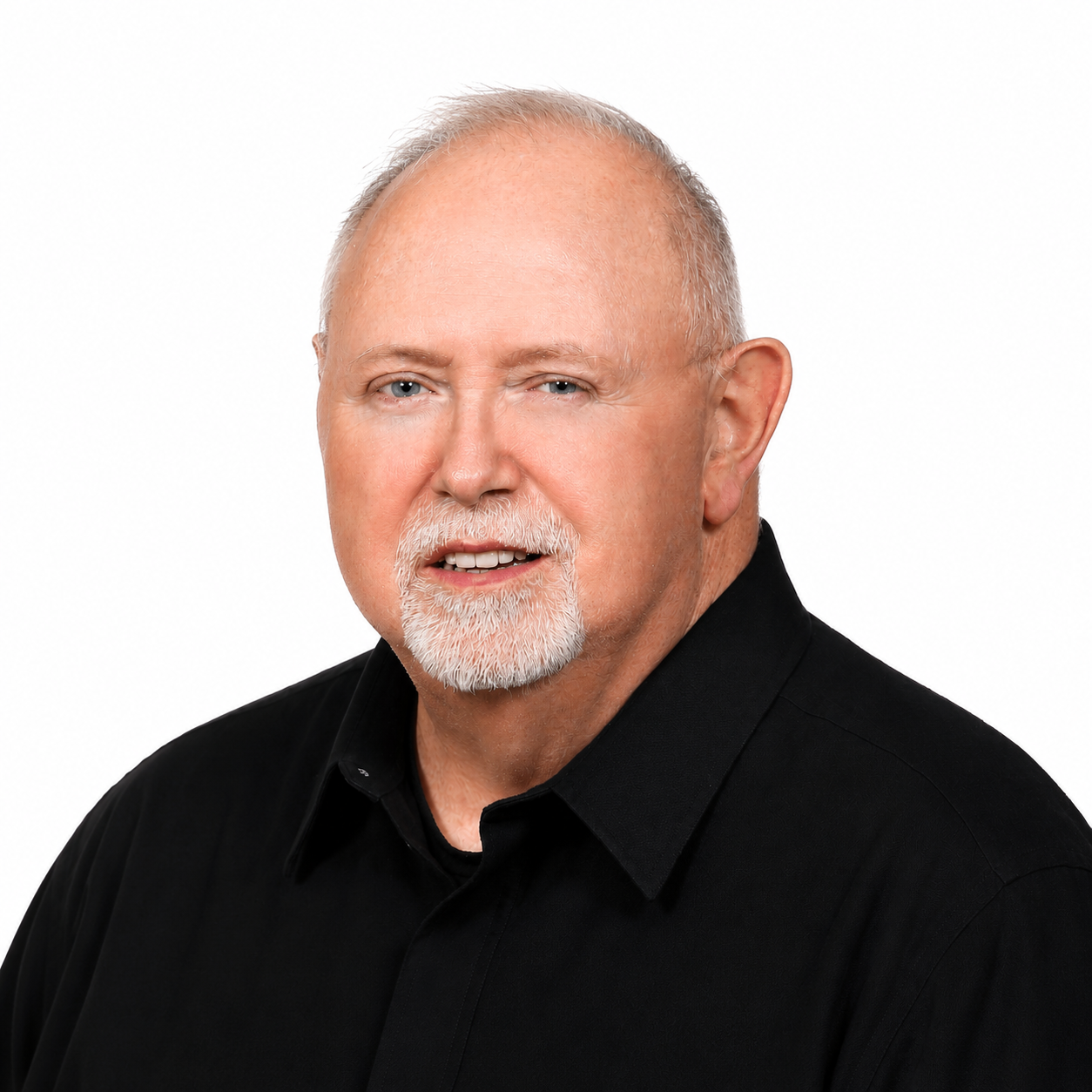
Michael Mirau
Michael Mirau is the founder and CEO of the ProActive Leadership Group, author of The Family Business Manifesto and a Metronomics-certified coach. He is part of the Flywheel Family Enerprise coaching network and working with family business owners to build self-operating organizations and sustainable family legacies.